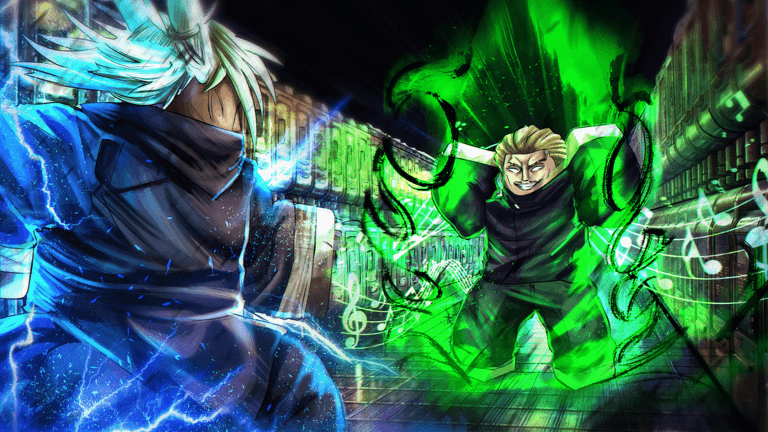
The current CT Buffs update explicitly buffs Shrine, Limitless, and every Special Grade Cursed Technique. Keep and retest those affected kits before rerolling; Ten Shadows remains a strong progression investment because of its substantial Part 2 route, but the latest official note does not single it out. This is an investment shortlist, not a promise that one kit wins every raid or PvP matchup.
The full list below is intentionally split by evidence quality. Two independent community rankings provide an older raid and general-meta baseline, while the current official listing identifies the systems that now require retesting. Any strict order is provisional until it is reproduced in the balance-and-fixes build, so do not burn a rare technique only because an older chart placed it lower.
Jujutsu Zero technique tier list
This is an investment tier list: it asks which technique is worth keeping, learning, and building around now. It weighs current patch attention, raid or farming coverage reported by established gameplay creators, access to a domain or passive route, execution difficulty, and how much of the kit still needs a post-patch retest. It does not pretend that an unrecorded damage number is a fact, and it does not combine clan strength, weapon strength, and technique strength into one score.
S tier remains the safest keep-and-retest pool. The latest official note directly names Shrine, Limitless, and all Special Grades as buffed, but it does not publish one ranking or exact values. Ten Shadows stays here as a progression investment rather than a beginner shortcut: its recent Part 2 route adds substantial summon and domain goals. The current patch makes controlled retesting more important than moving any named kit up or down from the headline alone.
A tier is a strong-candidate pool, not a fixed order: Cursed Energy Discharge, Love Train, Projection Sorcery, Disaster Tides, Disaster Flames, Mythical Beast Amber, and Copy. Older independent rankings repeatedly put several of these among the best raid or all-purpose options, but those comparisons predate the current balance pass. Keep one if its kit already solves your activity; run the repeatable test below before treating it as weaker than a headline technique.
B tier is the role-dependent group: Blood Manipulation, Star Rage, and Ratio can still be sensible when their range, rhythm, or resource use fits the player and encounter. C tier is the starter or niche group in the older baseline: Cursed Speech, Straw Doll, and Exploding Flesh. A C-tier label means 'replace only when you have a tested upgrade,' not 'delete immediately.' Account progression, gear, clan effects, and player execution can make a lower-ranked kit more useful than an unmastered rare roll.
 Official media
- S · keep and test
- Shrine · Ten Shadows · Limitless
- A · strong candidates
- CED · Love Train · Projection · Tides · Flames · MBA · Copy
- B · role dependent
- Blood Manipulation · Star Rage · Ratio
- C · starter or niche
- Cursed Speech · Straw Doll · Exploding Flesh
Best technique by activity
For the newest patch route, start by retesting any affected kit you already own. The current official note names Shrine, Limitless, and every Special Grade as buffed but does not identify a universal winner or the exact changed moves. If you own Shrine or Limitless, compare the same repeatable activity before and after the balance pass before spending for a replacement.
For long-form progression and summon depth, choose Ten Shadows. Its value comes from a dedicated island, Megumi objectives, Shadow Essence, Shikigami encounters, mastery paths, Part 2 additions, and a connected raid. It demands more setup than a simple farming kit, so rank it by the content you want to play rather than by a single burst clip.
For a Limitless-centered endgame plan, target Limitless only if you also want the passive route. Infinity Aura is documented as Limitless synergy in the official Infinity update, and a playable community walkthrough confirms the RCT and Infinity Aura systems. That does not make Limitless the fastest option for every account; it makes the surrounding progression path unusually clear.
For pure raid speed, use the older raid ranking as a shortlist, then retest. Cursed Energy Discharge, Love Train, Projection Sorcery, Disaster Tides, and Disaster Flames have all appeared in strong-community-option conversations, but the January and February comparisons cannot measure mechanics released months later. Run the same boss, difficulty, build shell, and timer for each candidate you actually own.
- Current balance retest: Shrine, Limitless, and all Special Grades
- Deep summon progression: Ten Shadows
- Infinity Aura build path: Limitless
- Raid-speed comparison: retest the A-tier candidate pool in the current build
How cursed techniques shape a kit
Begin with the actions visible in the live kit. Identify how the technique starts an engagement, maintains pressure or control, responds when an opponent closes distance, and exits a bad exchange. Not every technique must solve every problem. A coherent kit is one whose reliable actions match the situations you choose to create.
Learn the basic sequence before looking for maximum output. Test range, startup feel, recovery, movement commitment, and whether an action requires a target or specific state. These are observable qualities a player can evaluate without inventing frame data. Repeat the same simple encounter so differences come from the technique rather than changing conditions.
Separate a technique's identity from the rest of the build. Clan effects, stats, equipment, and player execution can all influence the result. When comparing techniques, keep as many of those variables stable as the game allows. Otherwise, a strong impression may belong to the surrounding build rather than the technique itself.
- Identify an opener, a dependable follow-up, a defensive answer, and an exit.
- Observe range and commitment before chasing damage claims.
- Test under repeatable conditions.
- Keep clan, stats, and equipment stable during comparisons.
Acquisition and selection
Use only the acquisition method displayed by the current game client. The content specification for this wiki tracks player interest in banners and rerolls, but the official web description available to us does not establish every current acquisition screen, rate, or guarantee. Read the live labels and confirmation text before using a limited resource.
Choose a target by play pattern rather than reputation. Ask whether you enjoy close pressure, space control, setup, mobility, or flexibility, then test how a current technique answers that preference. If a trial option is available in your current client, use it before committing resources, but do not assume an older trial path survived the menu update unchanged.
Do not assign odds from personal anecdotes. Unless an official interface displays a probability, keep it unknown. If a future catalog records acquisition details, each rate or guarantee should include the exact source, patch title, and review date so players can recognize when it needs rechecking.
Mastery and practice
The official description confirms that improving cursed techniques is part of the game, but it does not provide a complete current mastery table. Use the progression labels visible in your client and record their exact wording. If the game displays a mastery value or unlock condition, capture the technique, requirement, patch, and date together.
Practice in layers. First, make each action come out on command. Second, connect a small reliable sequence. Third, learn when not to use it by observing recovery and positioning after a miss. Finally, test the sequence under pressure. This produces useful skill even if a balance update changes numerical output.
Avoid grinding toward a threshold copied from an old guide. Check the next visible unlock in the current interface and set the smallest meaningful milestone. When the label changes or a skill appears, verify what actually unlocked before updating a public table. A single account observation should be marked as a live capture, not universal law, until reproduced.
- Record current progress labels exactly.
- Learn individual actions before combinations.
- Practice recovery and failed attempts, not only successful clips.
- Verify unlocks in the current patch before publishing thresholds.
Using Live Technique Trials
When a technique trial is available in your live client, use it to answer fit questions before acquisition questions. Can you understand the kit's rhythm? Does its preferred range feel natural? Can you recover when the first plan fails? Those observations are more durable than a tier placement, especially after a banner interface update.
Run the same short test for every candidate. Identify the available actions, try a simple engagement sequence, deliberately miss to see the commitment, and test one defensive response. Keep notes in the same format so comparison is fair. Do not claim exact damage or cooldowns unless you capture them with a reproducible method.
A trial environment may differ from normal progression. Treat it as evidence of how a kit feels and what actions are presented, not automatic proof of acquisition rates, permanent stats, or endgame performance. Recheck the acquired version if you later obtain the technique.
Domains and the Ten Shadows update
The current official page labels the update Balances + Fixes and names broad buffs for Shrine, Limitless, and all Special Grades. The preceding Sukuna update introduced Sukuna's Mark, World Ending Slash, Open Shrine, and Ten Shadows fixes. Together these dated notes identify what needs retesting; neither note is a complete move guide.
Document a named feature in two layers. The verified layer records that the official update lists it. The live-capture layer records what the current interface says it does, any requirement, and observable behavior. Keeping those layers separate prevents an official name from being expanded into unsupported mechanics.
For domain-specific planning, use the dedicated domain guide once its current activation and requirements are verified. Do not assume every cursed technique has the same domain path, cost, or unlock rule. If the live client provides no description for a value, mark it unknown rather than filling the gap from genre expectations.
- Current official scope: Shrine, Limitless, and all Special Grades buffed.
- Previous official names: Sukuna's Mark, World Ending Slash, Open Shrine, and Ten Shadows fixes.
- Exact move values and requirements need current live capture.
- Older Mahoraga behavior guidance requires a patch-date check.
Catalog and patch protocol
A trustworthy technique catalog needs more than a list of names. Each entry should include the exact live name, acquisition route as labeled, presented actions, progression or mastery wording, any domain relationship, source, patch, and review date. Numerical claims need a reproducible capture with conditions, not a single screenshot cropped away from context.
This page publishes a dated, community-sourced investment shortlist anchored to the current official patch notes; it is not a complete technique roster or a permanent damage ranking. Missing entries are a data gap, not permission to import an unsourced list or copy another guide's catalog.
After each update, compare the official description, then inspect affected live entries. Retest one technique with a stable surrounding build and downgrade any old recommendation whose evidence no longer applies. The result should be a dated reference that tells a player both what is known and what still requires verification.